Pool Depth and Shape Modification for Existing Pools
Structural remodeling to change pool depth, reduce a deep end, add steps, benches, or sun shelves, and reconfigure the pool layout: for existing pools in Venice, Sarasota, and Southwest Florida.
Schedule a Pool Modification EvaluationCan an existing pool be made shallower, reshaped, or structurally modified? In some cases, yes: but these are major structural remodeling projects, not cosmetic repairs. Changing pool depth, removing a deep end, adding steps or benches, or reconfiguring the pool shape may require engineering, permitting, shell work, plumbing changes, steel reinforcement, electrical changes, deck removal, tile and coping replacement, and complete resurfacing. Feasibility depends on the specific pool's construction, condition, and site.
What Determines Feasibility
Structural pool modification feasibility depends on a range of property- and pool-specific factors. These should be reviewed before committing to a design.
What Is Pool Depth and Shape Modification?
Pool depth and shape modification involves changing the physical structure or usable layout of an existing pool. Examples include raising the floor, reducing a deep end, rebuilding steps, adding a bench or swim-out, adding a sun shelf, changing a wall, straightening or softening a curve, modifying the shallow-to-deep transition, reducing part of the pool footprint, expanding part of the pool where feasible, or reconfiguring the relationship between pool and spa.
This is distinct from cosmetic remodeling. Tile replacement, coping replacement, and resurfacing alone do not change the pool's structure. Depth and shape modification requires structural work on the pool shell itself: and often affects plumbing, electrical, deck, and finish systems as well.
Because the scope is property-specific and depends on the existing pool's construction, Pool Creations evaluates each project individually before recommending an approach.
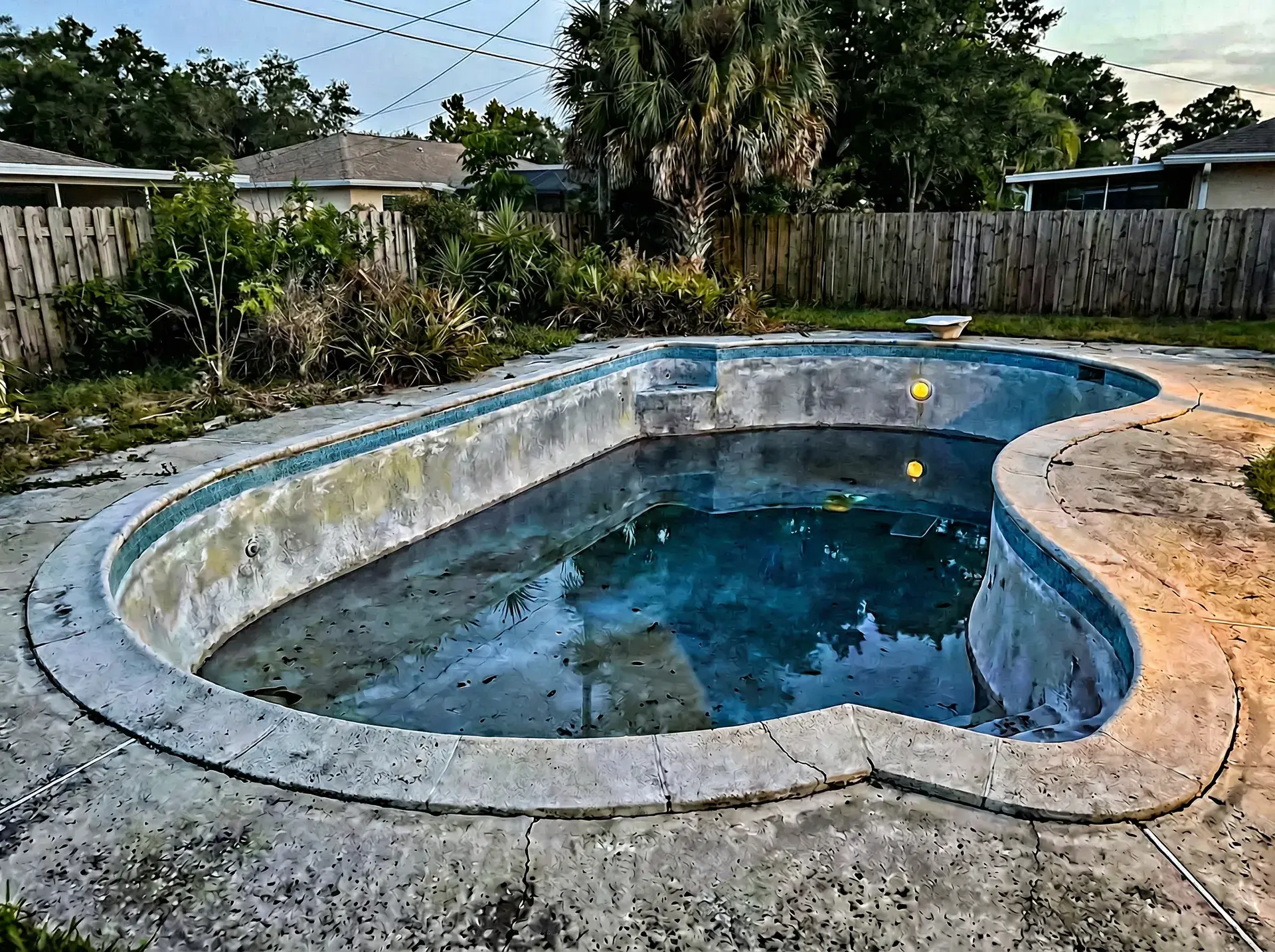
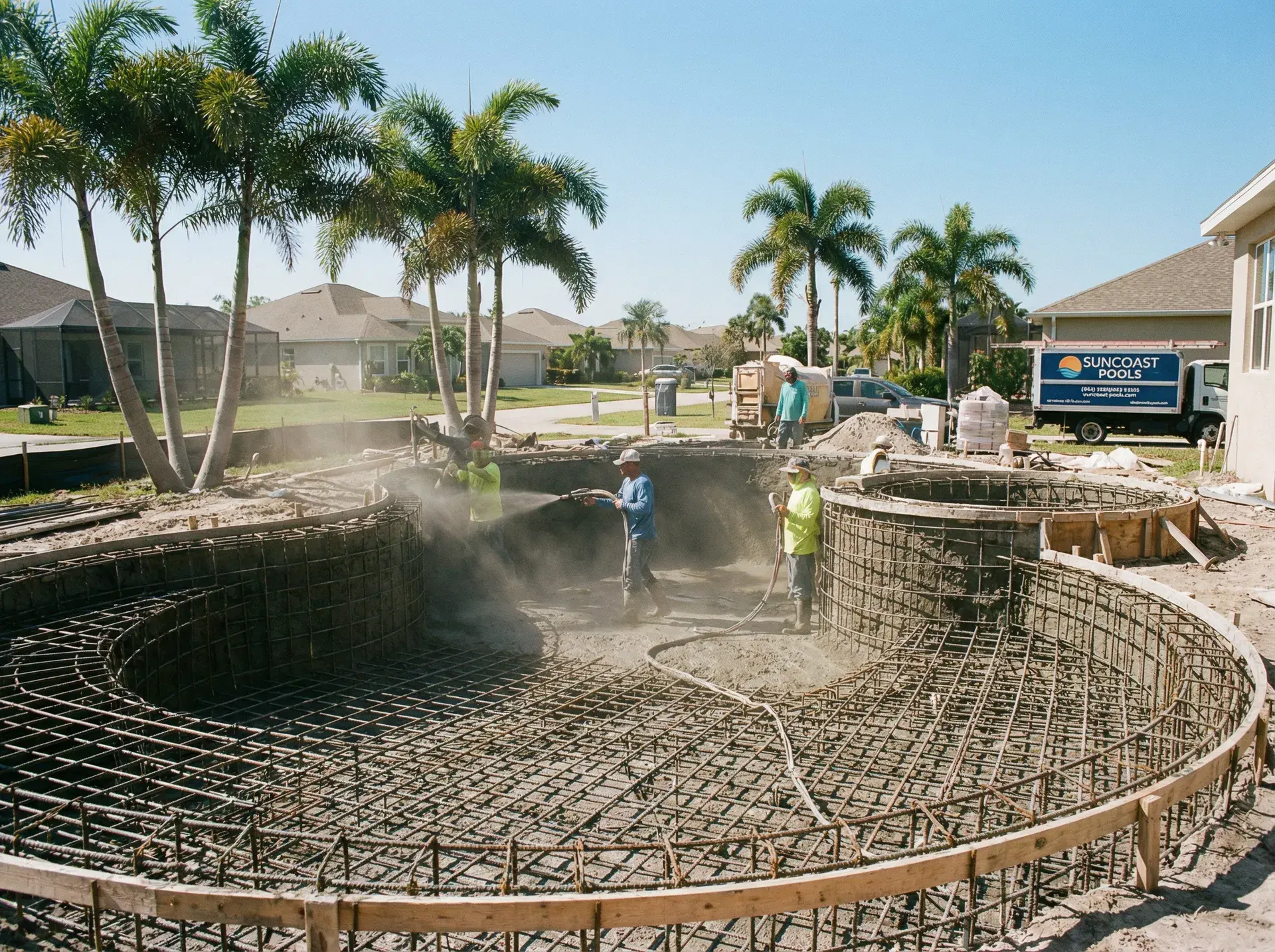
Can an Existing Pool Be Made Shallower?
Raising the pool floor may be possible in some pools, but it is a structural project. Homeowners often pursue this when the deep end is rarely used, the pool was originally designed for diving but is no longer used that way, easier maintenance is desired, or the household prefers a consistent-depth recreation pool.
Project components may include removing the existing finish, preparing the original shell, placing structural fill or engineered concrete, adding reinforcing steel, reconfiguring drains and plumbing, revising the floor slope, applying a new interior finish, and updating tile or coping where affected. Engineering and permitting are typically required.
Pool Creations does not describe a generic fill method as appropriate for every pool: the approach depends on the specific shell construction and conditions.
Can the Deep End Be Removed?
A deep end may sometimes be reduced or eliminated as part of a structural remodel. Factors that affect feasibility include the existing shell geometry, diving configuration, main drain placement, floor slope, wall height, plumbing, lighting, structural reinforcement requirements, updated use of the pool, and current code and engineering requirements.
Pool Creations does not state that a former diving pool will automatically become safe for all activities after modification. That determination requires engineering review, permitting, and compliance with current requirements.
Diving pool conversions: Pool Creations does not guarantee that a former diving pool is safe for diving or any other specific activity after modification. Engineering review, permitting, and compliance with current requirements determine what is appropriate.
Changing the Slope of the Pool Floor
The shallow-to-deep transition may be altered during a structural remodel. Common goals include a longer shallow area, a gentler transition, a single-depth recreation pool, a shallower lounging pool, more usable standing area, or reconfigured steps or benches.
The final design must account for circulation, drain locations, structural work, use, and applicable requirements. Changing the floor slope is not an isolated modification: it affects plumbing, drainage, and the overall pool hydraulics.
Can the Shape of an Existing Pool Be Changed?
Some shape changes may be possible, but the scope varies greatly. Straightening an existing wall, filling an unused corner, adding or removing a curve, reducing part of the footprint, rebuilding the entry area, modifying the spa connection, or creating a more geometric appearance are all examples of modifications that may be feasible.
Expanding the pool is more difficult than filling or reducing part of it. Expansion may require additional excavation, new steel connection, new shell construction, plumbing changes, deck removal, access, setback review, engineering, and permitting. Pool Creations does not imply that any pool can be enlarged: feasibility depends on the specific property and conditions.
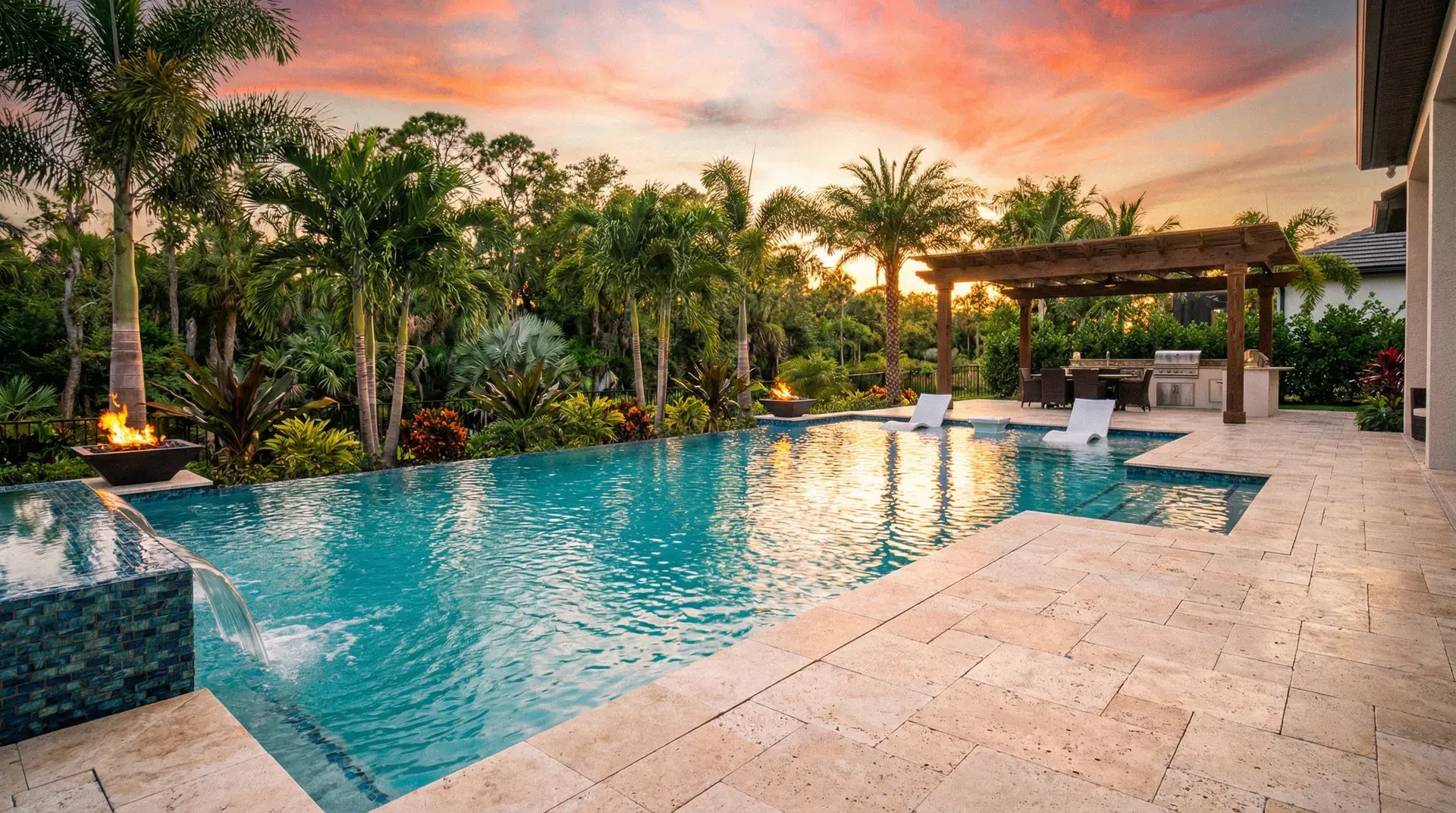
Adding Steps to an Existing Pool
Adding steps to an existing pool is a common structural modification. Reasons include easier entry, replacing a narrow ladder entry, creating wider entry steps, improving the transition from the deck, adding a seating step, or updating an older pool layout.
Pool Creations does not promise accessibility compliance unless specifically engineered and documented.
Adding steps may affect:
- Pool length and usable water area
- Water depth near the entry
- Circulation and return positions
- Existing lights or return fittings
- Tile and coping at the entry
- Deck and handrail placement
- Structural reinforcement
- Interior finish and resurfacing
Adding a Bench or Swim-Out
Benches and swim-outs may provide resting space, social seating, easier exit, a place to supervise children, a transition near the deep end, or a location for spa-style jets where appropriate.
Adding a bench or swim-out may affect usable swimming area, circulation, cleaning, pool cleaner movement, depth, structural design, lighting, and plumbing. New benches can create circulation dead spots if plumbing is not planned correctly. A bench is not a substitute for required exit features or safety equipment.
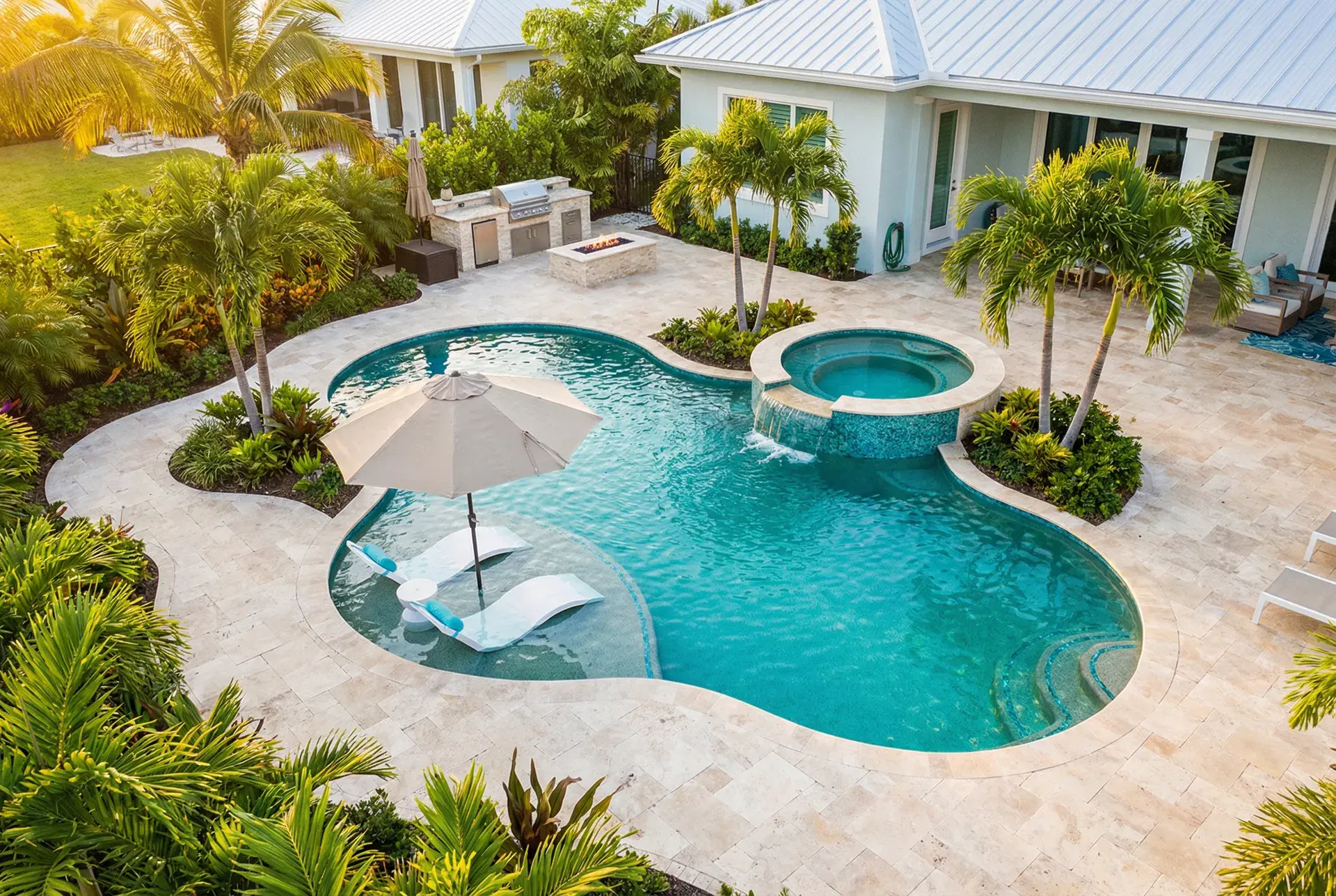
Adding a Sun Shelf to an Existing Pool
A sun shelf can sometimes be incorporated during a structural remodel. It occupies part of the existing pool footprint unless the pool is expanded, and may require significant shell, plumbing, steel, tile, deck, and finish work. Bubblers, umbrella sleeves, step placement, furniture, and water depth should be coordinated as part of the design.
A shelf may reduce open swimming area. Not every pool can accept a sun shelf: Pool Creations evaluates feasibility for the specific pool and layout.
Reducing the Size of an Existing Pool
Portions of a pool may sometimes be filled or reconfigured to reduce the water area. Possible reasons include creating more deck space, simplifying use, removing an outdated feature, rebalancing the backyard layout, or creating room for seating or landscaping.
This is a structural project: not a simple masonry patch. It involves shell work, drainage, deck, plumbing, and finish considerations. Pool Creations evaluates the specific pool before recommending an approach.
Project considerations:
- Shell preparation and structural fill
- Drain and plumbing reconfiguration
- Drainage and hydrostatic review
- Deck demolition and reconstruction
- Tile and coping at modified edges
- Complete interior finish
Expanding an Existing Pool
Expansion may be possible in limited situations, but it can approach the complexity of major reconstruction. Factors include available property space, setbacks and easements, existing shell construction, structural tie-in, excavation access, plumbing, deck and cage, utilities, engineering, permitting, and cost relative to replacement or new construction.
Pool Creations evaluates whether expansion is practical compared with rebuilding or choosing another design solution. In some cases, a new pool is a more cost-effective path to the desired result.
Modifying a Pool with an Attached Spa
Possible changes to an attached spa include rebuilding the spillway, raising or lowering portions of the spa exterior, changing the pool-to-spa transition, reconfiguring steps or seating, modifying the wall between pool and spa, and updating jets, plumbing, lighting, and finishes.
Not every attached spa can be structurally changed without extensive reconstruction. Pool Creations evaluates the specific configuration before recommending a scope.
Plumbing and Circulation Changes
Structural changes may require modification of main drains, suction fittings, skimmers, return fittings, spa plumbing, water features, floor returns, cleaner lines, autofill, hydrostatic relief, equipment sizing, and circulation patterns. New benches, shelves, steps, or wall changes can create dead spots if circulation is not planned correctly.
Pool Lights and Electrical Components
Modifying depth, walls, steps, benches, or shelves may affect existing light locations, light niches, conduits, junction boxes, bonding, electrical clearances, and illumination of steps or shallow areas.
Electrical work must be performed and permitted as required. Pool Creations does not provide detailed electrical instructions and does not perform electrical work outside the licensed scope of the project.
- Existing light locations and niches
- Conduits and junction boxes
- Bonding system
- Electrical clearances
- Step and shallow-area illumination
Main Drains and Suction-System Considerations
Raising a pool floor or changing a deep end may require changes to drain and suction-system design. Considerations include existing drain location, drain cover requirements, multiple suction outlets where required, plumbing accessibility, abandoning or relocating old fittings, floor slope, and circulation.
Pool Creations does not publish code-specific measurements for drain spacing or suction-system requirements, as these are subject to change and must be verified through current official sources for the specific project. A main drain cannot simply be covered without engineering and plumbing review.
Tile, Coping, Deck, and Finish Work
Structural pool modifications frequently affect surrounding finishes. It is often impractical to perform major shell modifications while preserving all surrounding finishes. The project may require complete interior-finish removal, new pool finish, tile replacement, coping replacement, deck demolition, deck reconstruction, new transitions, drainage adjustments, and screen-cage coordination.
Does a Modified Pool Need to Be Resurfaced?
Major depth or shape changes normally disturb the existing finish and structural surface. A complete new interior finish is generally part of the project. While there may be rare exceptions, structural modifications cannot usually be completed as an isolated patch while maintaining a dependable, uniform finish.
The resurfacing scope is defined as part of the overall project evaluation. Pool Creations coordinates tile, coping, and finish selection as part of the remodeling process.
Engineering and Permitting
Structural pool modifications may require engineering, revised plans, structural details, hydraulic review, electrical review, permit approval, updated site plan, survey review, and inspections.
Pool Creations coordinates the pool-remodeling scope with the appropriate engineering and permitting requirements when structural changes are proposed. Pool Creations is not the engineering authority: engineering is performed by licensed engineers as required for the specific project.
May be required:
- Engineering and structural details
- Hydraulic and electrical review
- Revised plans and site plan
- Survey review
- Permit approval
- Inspections
Current Standards and Older Pools
Older pools may have been constructed under different standards or contain older plumbing and electrical systems. A major remodel may require affected components to be updated according to the approved scope and current requirements.
Pool Creations does not claim that every existing component must be completely upgraded: the scope is defined by the approved project, engineering, and permitting requirements. Pool Creations does not provide legal conclusions about code compliance without permitting review.
Pool Modification for Retirees and Changing Household Needs
As household needs change, a pool that was built for one lifestyle may not serve another. Common goals include reducing an unused deep end, adding wider entry steps, adding a bench, creating a shallower recreation area, improving handrail placement, simplifying operation, adding heating or automation, or reducing maintenance demands.
Pool Creations does not use the terms "age-proof" or "fall-proof" and does not make safety guarantees. Pool Creations does not claim ADA compliance unless specifically designed and approved.
Pool Modification for Families
Families often want more shallow play space, better supervision sightlines, seating, wider steps, or the removal of an unused diving configuration. Creating more deck space, adding modern lighting, or reconfiguring the entry area are also common goals.
No pool design replaces active supervision, required barriers, or safe-use practices. Pool Creations designs and constructs the physical pool: safety practices and supervision are the responsibility of the homeowner.
Is Structural Pool Modification Worth It?
Modification may make sense when:
- The existing shell is otherwise suitable
- The homeowner likes the location
- The desired changes solve long-term usability concerns
- The surrounding outdoor space is being remodeled
- Multiple finishes and systems already need replacement
- The modification avoids abandoning an otherwise usable pool
A different option may be more practical when:
- The shell has major structural problems
- The desired expansion is extensive
- Setbacks limit the design
- Access is severely restricted
- The cost approaches full replacement
- The existing pool location no longer fits the property plan
Pool Creations recommends a condition assessment and design evaluation before committing to either path.
How the Evaluation and Design Process Works
Pool Creations does not guarantee feasibility, timeline, or permit approval. The process below describes the general steps involved in evaluating and planning a structural pool modification.
Review homeowner goals
Understand what the homeowner wants to change and why: depth, shape, entry, seating, or other structural goals.
Inspect the existing pool and accessible components
Review the pool shell, plumbing access points, equipment, deck, and coping condition.
Review measurements and existing layout
Document current dimensions, floor slope, and feature locations.
Evaluate shell, deck, plumbing, and equipment conditions
Assess what can be preserved, what needs replacement, and what structural work is required.
Review survey, setbacks, and access where expansion is proposed
Confirm property constraints before any expansion scope is developed.
Develop preliminary modification options
Present feasible approaches with scope, trade-offs, and considerations for each.
Coordinate engineering
Engage licensed engineering as required for the structural scope.
Define tile, coping, deck, equipment, and finish scope
Establish the complete project scope including all affected systems and finishes.
Complete permitting
Submit plans and coordinate permit approval with the applicable jurisdiction.
Schedule construction
Coordinate the construction sequence to minimize disruption and complete the project efficiently.
Alternatives to Major Structural Modification
When the desired modification is impractical, these alternatives may be worth evaluating. Pool Creations does not recommend a specific alternative without evaluation.
Frequently Asked Questions
Can an existing pool be made shallower?
In some cases, yes. Raising the pool floor is a structural project that may involve removing the existing finish, preparing the shell, placing structural fill or engineered concrete, adding reinforcing steel, reconfiguring drains and plumbing, revising the floor slope, and applying a new interior finish. Feasibility depends on the existing shell construction, current depth, plumbing locations, and engineering review. Pool Creations evaluates each pool individually before recommending an approach.
Can you remove the deep end of a pool?
A deep end may sometimes be reduced or eliminated as part of a structural remodel. The scope depends on the existing shell geometry, main drain placement, floor slope, wall height, plumbing, lighting, and structural reinforcement requirements. Pool Creations does not guarantee that a former diving pool will be suitable for any specific activity after modification: that determination requires engineering and permitting review.
Can the slope of a pool floor be changed?
Yes, the shallow-to-deep transition may be altered during a structural remodel. The final design must account for circulation, drain locations, structural work, and applicable requirements. Common goals include a longer shallow area, a gentler transition, or a more consistent single-depth recreation pool.
Can the shape of an existing pool be changed?
Some shape changes are possible, but the scope varies greatly. Filling a corner, straightening a wall, or reducing part of the footprint is generally more straightforward than expanding the pool. Expansion may require additional excavation, new shell construction, plumbing changes, deck removal, setback review, engineering, and permitting. Pool Creations evaluates whether a shape change is practical for the specific pool and property.
Can an existing pool be made larger?
Expansion may be possible in limited situations, but it can approach the complexity of major reconstruction. Factors include available property space, setbacks and easements, existing shell construction, structural tie-in, excavation access, plumbing, deck and cage, utilities, engineering, and permitting. Pool Creations evaluates whether expansion is practical compared with rebuilding or choosing another design solution.
Can an existing pool be made smaller?
Portions of a pool may sometimes be filled or reconfigured to reduce the water area. This is a structural project, not a simple masonry patch, and involves shell work, plumbing, drainage, deck, and finish considerations. Pool Creations evaluates the specific pool before recommending an approach.
Can steps be added to an existing pool?
Yes, in many cases. Adding steps may affect pool length, water depth, circulation, existing lights or returns, tile, coping, deck, handrail placement, structural reinforcement, and resurfacing. Pool Creations does not promise accessibility compliance unless specifically engineered and documented.
Can a bench or swim-out be added?
A bench or swim-out can often be added during a structural remodel. It may affect usable swimming area, circulation, cleaning, pool cleaner movement, depth, structural design, lighting, and plumbing. A bench is not a substitute for required exit features or safety equipment.
Can a sun shelf be added to an existing pool?
A sun shelf can sometimes be incorporated during a structural remodel. It occupies part of the existing pool footprint unless the pool is expanded, and may require significant shell, plumbing, steel, tile, deck, and finish work. Not every pool can accept a sun shelf: Pool Creations evaluates feasibility for the specific pool.
Does changing the depth require resurfacing?
Major depth or shape changes normally disturb the existing finish and structural surface. A complete new interior finish is generally part of the project. While there may be rare exceptions, structural modifications cannot usually be completed as an isolated patch while maintaining a dependable, uniform finish.
Will the deck need to be removed?
In many structural modification projects, at least part of the deck will need to be removed: particularly where shell work, plumbing changes, or coping replacement are required. The extent of deck work depends on the specific modification scope. Pool Creations defines the deck scope as part of the overall project evaluation.
Will the plumbing need to be changed?
Structural changes frequently require modification of main drains, suction fittings, skimmers, return fittings, floor returns, cleaner lines, or equipment sizing. New benches, shelves, steps, or wall changes can create circulation dead spots if plumbing is not planned correctly. Pool Creations coordinates plumbing changes as part of the structural remodel scope.
Does the project require engineering?
Structural pool modifications may require engineering, revised plans, structural details, hydraulic review, electrical review, and updated site plans. Pool Creations coordinates the pool-remodeling scope with the appropriate engineering and permitting requirements when structural changes are proposed.
Does the project require a permit?
Structural pool modifications typically require a permit. The specific requirements depend on the jurisdiction, scope of work, and applicable codes. Pool Creations coordinates permitting as part of the project process.
Can a diving pool be converted to a recreation pool?
A former diving pool may sometimes be modified to reduce depth or reconfigure the layout. Pool Creations does not guarantee that a former diving pool will be safe for diving or any other specific activity after modification: that determination requires engineering review, permitting, and compliance with current requirements.
Can the pool be modified for easier entry?
Yes. Adding wider steps, a bench, a swim-out, or improving handrail placement are common goals for homeowners who want easier pool entry. The feasibility and scope depend on the existing pool layout, plumbing, structural conditions, and applicable requirements. Pool Creations does not claim ADA compliance unless specifically designed and approved.
Is it cheaper to modify a pool or build a new one?
It depends on the scope of the desired changes, the condition of the existing shell, and the overall project goals. Targeted modifications to an otherwise sound pool are often more cost-effective than full replacement. However, when the desired changes are extensive, the shell has major structural problems, or the cost approaches full replacement, new construction may be the more practical option. Pool Creations evaluates both paths and provides an honest recommendation.
Can an attached spa be changed during the remodel?
Yes. Modifications to an attached spa may include rebuilding the spillway, raising or lowering portions of the spa exterior, changing the pool-to-spa transition, reconfiguring steps or seating, modifying the wall between pool and spa, and updating jets, plumbing, lighting, and finishes. Not every attached spa can be structurally changed without extensive reconstruction: Pool Creations evaluates the specific configuration.
How do I know whether my pool can be modified?
The best way to determine feasibility is an on-site evaluation. Pool Creations reviews the existing pool, accessible components, measurements, layout, shell condition, deck, plumbing, and equipment to determine which modifications may be practical. Contact us to schedule a pool modification evaluation.
Does Pool Creations perform structural pool remodeling?
Yes. Pool Creations designs and constructs structural pool remodeling projects in Venice, Sarasota, and Southwest Florida, including depth modifications, shape changes, step additions, bench and swim-out additions, sun shelf additions, and pool-and-spa reconfiguration. Licensed CPC1458354.
Related Resources
Schedule a Pool Modification Evaluation
Pool Creations can evaluate the existing pool, surrounding deck, plumbing, access, and homeowner goals to determine which depth or shape modifications may be practical.
Licensed CPC1458354 · Serving Venice, Sarasota, and Southwest Florida
Pool remodeling: local help and appointments
Send photos of your existing pool and describe the changes you want. Tile, coping, decks, spa additions and structural changes require different scopes, which we review before preparing a proposal.
Pool Creations is based in Venice and serves communities in Sarasota, Manatee and Charlotte Counties. Share your property address so our team can confirm the scope and appointment availability.